If you want a Houston neighborhood where walking feels like a real part of everyday life, Montrose is usually near the top of the list. You may still use your car plenty, but in this part of the city, grabbing coffee, heading to a park, stopping by a gallery, or catching a bus can often happen much closer to home. That mix of convenience, character, and culture is a big reason Montrose stands out. Let’s take a closer look at what walkable living really looks like here.
Why Montrose Feels Walkable
Montrose, often grouped with Neartown, sits just west of downtown Houston and covers roughly four square miles. The City of Houston describes it as one of the city’s oldest and most historic areas, with six city-designated historic districts and a mix of retail, entertainment, and cultural spaces. That layered mix helps create a neighborhood that feels more compact and connected than many other parts of Houston.
The numbers support that impression. Walk Score ranks Neartown-Montrose first among Houston neighborhoods, with a walk score of 86, a transit score of 54, and a bike score of 73. At Montrose Boulevard and Hyde Park Boulevard, the walk score reaches 95, which shows how much the experience can change from block to block.
Montrose also has the kind of density that supports life on foot. Houston’s 2024 neighborhood profile reports about 32,693 residents and nearly 9,998 people per square mile. When you combine that with older street patterns and a close mix of homes, shops, parks, and community spaces, you get a neighborhood that often feels easier to navigate without driving for every short trip.
What Daily Errands Can Look Like
Walkable living in Montrose is less about one single main street and more about having small destination clusters spread across the neighborhood. You might walk out for coffee in the morning, meet friends for dinner later, and stop at a local shop or mural-lined block along the way. That pattern gives the area a lived-in, neighborhood feel rather than a one-note commercial strip.
Visit Houston highlights well-known local spots like Common Bond Bistro & Bakery and Agora for coffee or breakfast. For dining, places like Hugo’s, Traveler’s Table, Rosie Cannonball, and Ostia help show the range of options packed into the area. The neighborhood is also known for bars and nightlife staples such as Anvil Bar & Refuge and Bar Boheme.
Just as important, Montrose is shaped by locally oriented businesses and gathering places rather than big-box retail. That makes everyday outings feel more personal and more tied to the neighborhood’s identity. If you value being able to step out and enjoy a mix of independent places nearby, that is a big part of Montrose’s appeal.
Arts And Culture Are Part Of The Routine
In Montrose, walkability is not only about errands. It is also about having meaningful places nearby that add variety to your week. The neighborhood’s cultural footprint is one of the reasons many people find it easy to spend time out on foot here.
The Menil Collection anchors part of that experience with gallery spaces set in a parklike environment. Rothko Chapel is another nearby landmark and a place that welcomes people of every belief. The city also identifies institutions like Art League Houston, the Montrose Center, and the University of St. Thomas as part of the area’s fabric.
The Freed-Montrose Neighborhood Library at 1001 California adds another practical and community-focused stop. It includes reading areas, technology access, children and teen sections, meeting rooms, and some free parking. For residents, that means a library visit can feel like part of everyday neighborhood life, not a special trip across town.
Parks Make Walking More Useful
A walkable neighborhood works better when there are places to pause, exercise, or just get outside. Montrose has several park options woven into the area, which helps turn walking into something more enjoyable and practical. You are not only moving from one errand to another. You also have green spaces that support a more relaxed routine.
City listings include Bell Park, Cherryhurst Park, and Avondale Promenade Park. The Neartown-Montrose super neighborhood page also identifies Lamar Park, Mandell Park, Peggy H. Shiffick Park, West Gray Adaptive Recreation Center, and Westheimer Greenspace. These spaces help break up the built environment and give the neighborhood more breathing room.
Just west of Montrose, Buffalo Bayou Park expands those options in a big way. The park offers 160 acres of green space that can be explored on foot, by bike, or on the water. For many people, having that kind of major outdoor amenity so close adds a lot to the car-light lifestyle.
Bikes And Transit Add Flexibility
Montrose’s walkability gets a boost from bike and transit options. Even if you are not walking every trip, you may be able to combine walking with biking or bus service in a way that cuts down on how often you need to drive. That flexibility matters in a city like Houston.
Buffalo Bayou’s trail network is a big part of that. The Sabine-to-Montrose stretch connects people to one of Houston’s most useful recreation corridors. Houston BCycle stations in and around Montrose include Lost Lake, Westheimer and Waugh, Dunlavy and Westheimer, and Eleanor Tinsley Park.
METRO service also gives Montrose more support than many neighborhoods across the city. Route 82 Westheimer serves Montrose every 8 minutes on weekdays and every 10 minutes on weekends for most operating hours. Route 56 Airline/Montrose runs every 20 minutes on weekdays and every 30 minutes on weekends, with listed destinations that include Buffalo Bayou Trail, the Freed-Montrose Neighborhood Library, Contemporary Arts Museum Houston, and the Museum of Fine Arts.
What Car-Light Living Really Means
It helps to set the right expectation. Montrose is best described as car-light, not fully car-free. Houston overall still leans heavily on driving, so most residents will still keep a car in the picture for at least some trips.
What changes in Montrose is how often you may feel like you need it. Because the neighborhood has strong walkability, bike access, nearby parks, and frequent bus service, many shorter outings can happen without getting behind the wheel every time. That can make your week feel more flexible and a little less centered on traffic and parking.
This is also where block-by-block location matters. A home closer to Westheimer, Montrose Boulevard, Buffalo Bayou connections, or active retail pockets may support a different routine than a home on a quieter interior street. Two homes in the same neighborhood can offer very different day-to-day experiences depending on what is nearby.
Homes That Fit A Walkable Lifestyle
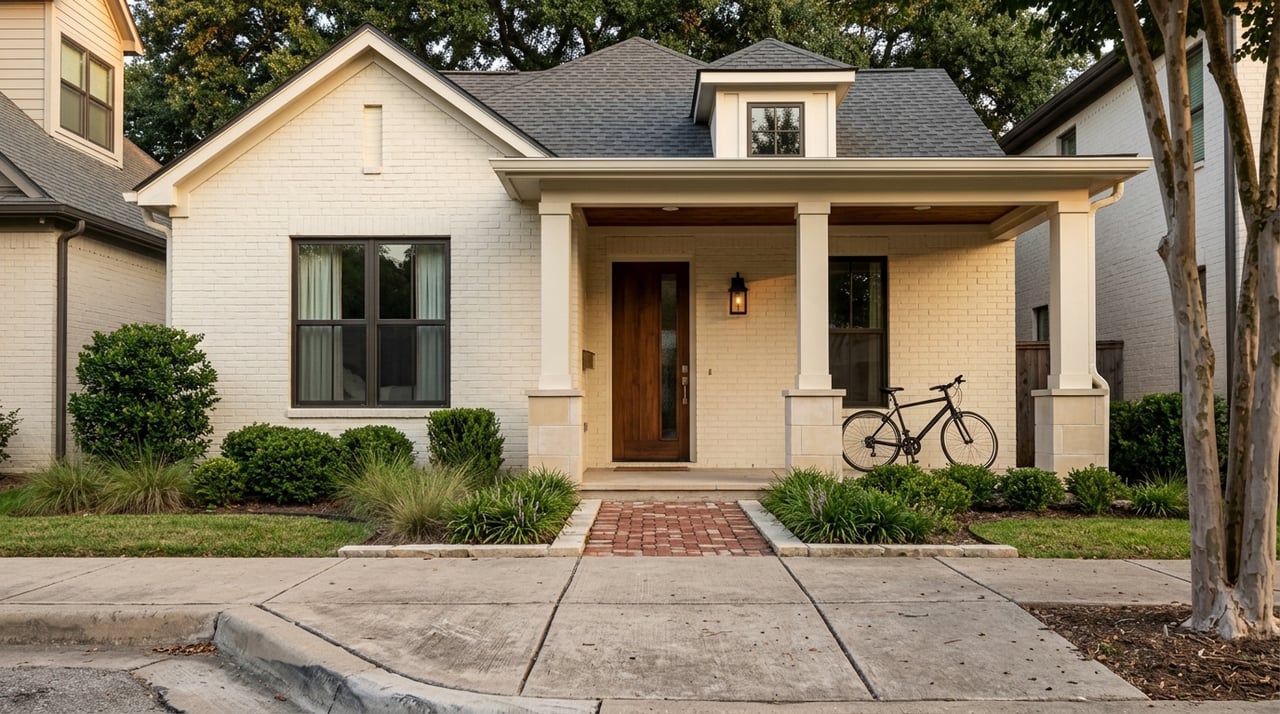
Montrose offers a wide range of housing types, and that variety supports different versions of walkable living. According to the city’s neighborhood profile, the area includes cottage housing, older duplexes, large apartment communities, townhome development, and vintage single-family homes. Historic materials for First Montrose Commons and Audubon Place also point to one-story bungalows, two-story homes, and early 20th-century streetcar-suburb roots.
That variety gives you options depending on how you want to live. A condo or apartment near Westheimer may put restaurants, coffee shops, and transit closest to your front door. A bungalow or detached home on a side street may offer a quieter setting while still keeping parks, dining, and culture within reach.
For buyers, that means it is important to think beyond square footage alone. If walkability matters to you, the right fit may come down to how easily you can reach the places you actually use each week. A home that supports your daily routine can feel more valuable than one that simply checks boxes on paper.
Why Walkability Matters For Sellers
If you are selling in Montrose, the neighborhood itself is part of the value story. Buyers are not only looking at bedrooms, finishes, and lot size. They are also paying attention to how the location connects them to coffee spots, restaurants, parks, trails, transit, and cultural destinations.
That does not mean every home should be marketed the same way. It means the strongest presentation usually connects the property to the lifestyle it supports. In a neighborhood like Montrose, that kind of positioning can help buyers understand what daily life would actually feel like there.
This is where local knowledge matters. The right marketing approach should highlight the home itself while also clearly showing how its location fits into Montrose’s block-by-block rhythm. For sellers, that can make a meaningful difference in how your home is perceived.
How To Evaluate Walkability For Yourself
If you are considering a move to Montrose, the best next step is to test the neighborhood in real life. Walkability is personal. What feels convenient to one person may feel less useful to another depending on work habits, hobbies, and how often you like to be out and about.
Here are a few smart ways to evaluate it:
- Walk the area at different times of day
- Check how close you are to the places you would use weekly
- Look at access to parks, trails, and BCycle stations
- Review nearby METRO routes like the 82 and 56
- Notice whether the block feels more residential, more active, or more mixed-use
A good home search in Montrose should take both the property and the surrounding routine into account. If your goal is to live in a part of Houston where more of life can happen close to home, Montrose is one of the clearest places to start.
If you are thinking about buying or selling in Montrose, working with a team that understands Houston’s micro-markets can help you narrow down the right fit and position your move strategically. Reach out to Joseph Diosana for clear guidance, local insight, and a process-driven plan built around your goals.
FAQs
How walkable is Montrose compared with other Houston neighborhoods?
- Neartown-Montrose ranks first among Houston neighborhoods on Walk Score, with a walk score of 86, a transit score of 54, and a bike score of 73.
What does car-light living in Montrose mean for daily life?
- Car-light living in Montrose usually means you may still own and use a car, but many shorter trips for dining, coffee, parks, culture, biking, or transit can happen without driving every time.
What kinds of places can you walk to in Montrose?
- Depending on your block, you may be able to walk to cafes, restaurants, bars, parks, galleries, library services, and neighborhood institutions spread across the area.
What transit options support walkable living in Montrose?
- METRO Route 82 Westheimer and Route 56 Airline/Montrose provide regular bus service through and around Montrose, adding another option for getting to nearby destinations.
What home types support walkable living in Montrose?
- Montrose includes condos, apartments, townhomes, duplexes, bungalows, and single-family homes, so buyers can often choose between a more convenience-focused location or a quieter residential setting with nearby amenities.
Why does walkability matter when selling a home in Montrose?
- In Montrose, buyers often consider not only the home itself but also its access to dining, parks, transit, trails, and cultural destinations, so location-based lifestyle can be an important part of the marketing story.