
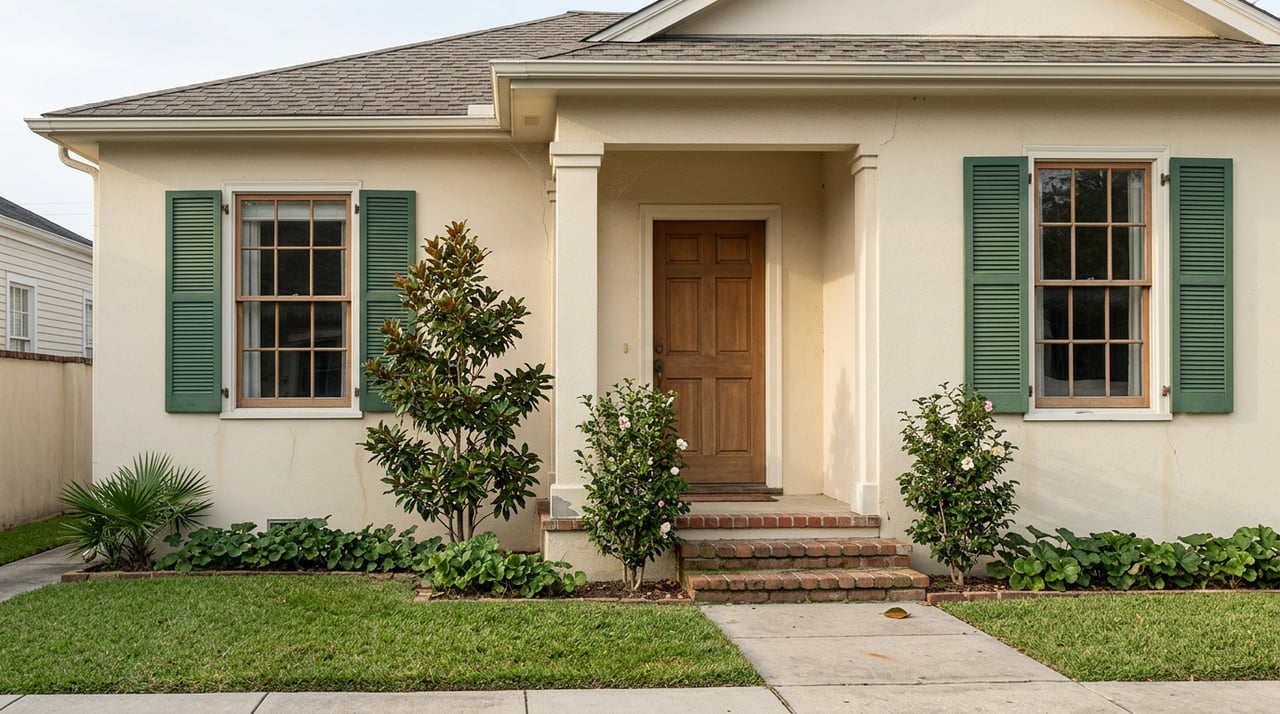
Two bungalows sit four blocks apart in Montrose, both built in the 1930s, both wearing the same wood siding and multi-pane windows that make this part of Houston photograph so well. The owner of the other could face fines if work starts without an approved COA, according to City of Houston Historic Preservation. Same era. Same look. Completely different rulebook.
That difference has nothing to do with price, square footage, or curb appeal. It comes down to which side of an invisible boundary the address falls on, and almost nobody selling a Montrose home puts that boundary on the listing sheet.
The District Inside the Neighborhood
Most of what people call Montrose carries no historic designation at all. Houston has never had citywide zoning, so outside of a specific set of protected pockets, owners have wide latitude to renovate, add on, or rebuild as they see fit. First Montrose Commons is one of the exceptions. The City of Houston designated it a historic district in June 2010, and the City of Houston lists its boundaries as Sul Ross Street on the north, Spur 527 on the east, Colquitt Avenue on the south, and Roseland Avenue on the west.
That's a small footprint. The First Montrose Commons Civic Association actually serves a much larger area, stretching from Richmond Avenue down to West Alabama Street and over to Montrose Boulevard, which means most addresses under that civic association's umbrella sit entirely outside the historic district's rules. A buyer can be a few doors down from a protected Craftsman or Colonial Revival home and never encounter the city's design review process at all.
As of January 2026, Houston has 23 historic districts citywide, along with 305 individually designated landmarks and 213 protected landmarks. First Montrose Commons is one thread in that fabric, not the whole cloth, and knowing whether an address falls inside or outside of it changes the entire renovation conversation before a buyer ever picks up a hammer.
What Actually Triggers a City Sign-Off
Inside the district, the rule that surprises people most isn't that everything requires approval. It's which specific things do.
According to Jewish Herald-Voice, ordinary maintenance and routine repairs generally do not require a Certificate of Appropriateness, often shortened to COA. But the moment a project touches the exterior appearance of the home, the calculation changes.
A Live File From This Year
The clearest picture of how granular this review gets comes from an actual case moving through the system in 2026. The City of Houston application materials show that two adjoining properties at 503 and 505 Sul Ross Street, a 1946 Craftsman and a 1930 Colonial Revival, were recently replatted into a single listing and filed for a Certificate of Appropriateness in January 2026. The proposed scope reads like a checklist of exactly the details this review exists to control: replacing all windows with wood units matching the original lite pattern due to water damage and wood rot, removing and replacing the dash-finish stucco (with a sample required for staff approval before work begins), restoring existing wood windows elsewhere on the property, and replacing window shutters with wood shutters in the same proportions as the originals.
Even the dimensions are spelled out. New windows in a historic district must be inset one and three-quarters of an inch, and any one-over-one window design has to be divided exactly in half horizontally. That level of specificity is not unusual. It's the standard.
The Discount Nobody Advertises
The financial trade-off cuts both ways, and most buyers only hear about the restrictive half.
A project that receives an approved COA becomes eligible for a 50 percent discount on building permit fees. That's a real number worth factoring into a renovation budget for a contributing home, not just a bureaucratic footnote. The flip side is what happens without approval. Work completed outside an issued COA is subject to fines, and the city can require the owner to remove the work and restore the structure to its prior appearance.
The Clock You Don't Control
The timeline is where this catches people off guard mid-renovation, not before closing.
The City of Houston's Historic Archaeological and Historical Commission, the body that reviews these applications, meets once a month. A complete application has to be submitted by noon, 22 calendar days ahead of that meeting, filed through the city's online Historic Preservation Tracker system. Miss that window and the project waits for the next month's cycle. For a buyer who assumed they'd start exterior work the week after closing, that lag can push a simple window swap out by six to eight weeks before a shovel ever touches the ground.
There's a second layer worth knowing about too. The City of Houston notes that deed restrictions enforced by a neighborhood civic association can carry their own approval requirements separate from the city's COA process. A project can clear the city's review and still need a second sign-off from the civic association, or vice versa.
Why the Timing Matters Right Now
Montrose is changing fast just outside these protected blocks. Montrose Collective, the mixed-use project at 888 Westheimer built by Radom Capital, brought Uchi, Marmo, and Okto into a single retail and office development. A few blocks over, Skanska has announced Starling, a new mixed-use project at the corner of Westheimer and Montrose Boulevard with 30,000 square feet of retail space, and Radom Capital has separately announced plans to redevelop the historic Tower Theater and its adjacent buildings on Westheimer. That's a neighborhood actively reinventing its commercial spine in real time.
None of that touches the century-old bungalows inside First Montrose Commons, and that's the point. Montrose today is really two neighborhoods layered on top of each other: one modernizing quickly with new construction and national restaurant tenants, and one where many exterior changes are subject to historic review. A buyer comparing two similar listings needs to know which version of Montrose they're actually buying into, because the renovation math, the timeline, and the permit costs are not the same.
A Few Questions Worth Asking Before You Write an Offer
If a previous owner did unpermitted exterior work, is that my problem now? Asking directly about prior COA history on a contributing home is worth doing before closing, not after.
Do minor changes always require the full monthly review cycle? Not always. Certain minor alterations that don't affect the historic character of the property can be approved administratively within a few days rather than waiting for the full commission meeting.
Let's Look at Your Address Together
Whether a home sits inside First Montrose Commons or three blocks outside it changes the entire plan, from renovation budget to closing timeline. If you're weighing a purchase in Montrose or anywhere else in Houston's patchwork of historic districts, The Property Joes Group can walk the actual boundary lines with you before you write an offer. Start Your Home Journey Today.
This article is general information, not legal, tax or financial advice. Consult a qualified professional about your situation.